
Plenary session

The plenary session is scheduled for Wednesday morning, 16th September (Main Hall) and will consist of a series of outstanding talks.
It's hard to imagine a richer offering of speakers. And that's the point of the plenary session: provide a shared experience for all conference attendees.
Schedule of plenary session:
09:15 - Introduction - Conference Organizers
09:25 - Welcome address by the Rector of the Warsaw University of Technology
09:35 - Welcome Address by E-MRS President
09:45 - Laudation and Presentation of the Jan Czochralski Award to Prof. Robert Langer
10:00 - Czochralski Award Laureate - Prof. Robert Langer, Massachusetts Institute of Technology, Cambridge, USA
 |
Biomaterials and how they will change our lives V. Prasad Shastri1 and Robert Langer2 1 Institute for Macromolecular Chemistry, University of Freiburg, Germany
|
|
|
|
||
|
While the explosive growth of plastics ushered in an era of convenience throughout the 20th century, research in biomaterials in the last decade has catalyzed life-altering innovations in health tech. The impact of biomaterials on modern medicine can be traced back to rather modest beginnings in the 1970’s when clinicians and engineers began to piece together a paradigm where polymers emerged as an important component of therapeutic intervention. This led to a frenzy of activity in the late 1990s, pushing the boundary of how materials can be used and leveraged in modern medicine, and cementing their status as a driver of innovation in health technologies. Modern medical technology owes much of its success to the role biomaterials have played in crafting new solutions, imagining new paths to regenerate tissue, to heal ailments, to improve quality of life, and prolong human life. This talk will summarize these early efforts that led to the modern era of materials-driven medicine; new emerging concepts in the highly impactful disciplines of drug delivery and regenerative medicine will be presented, and the materials innovation space will be discussed. |
||
10:45 - Prof. Laurent Cario, Nantes Université, CNRS, IMN; Mottronix, Nantes, France
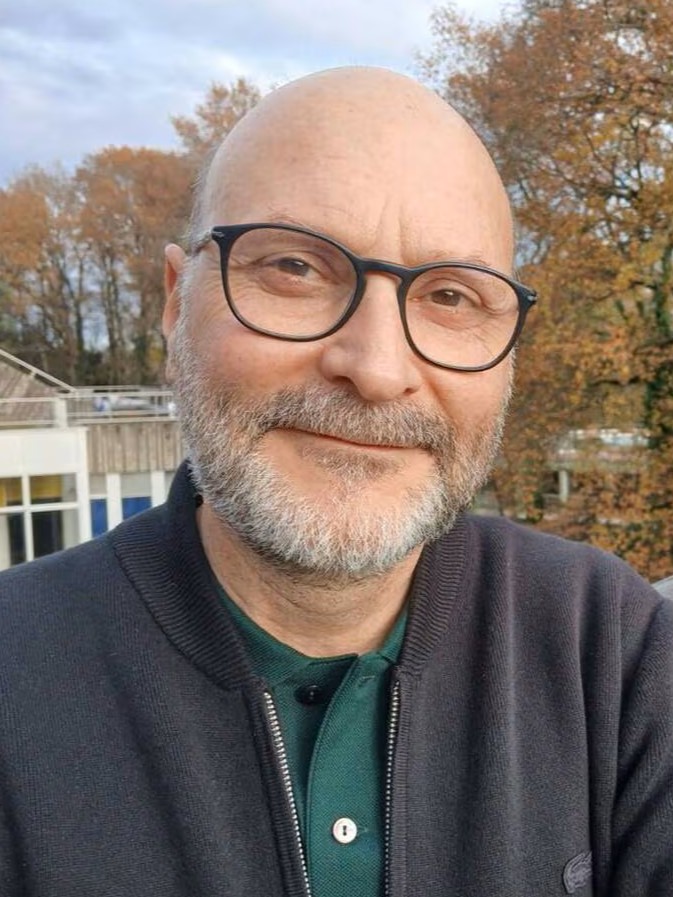 |
Correlated quantum materials for data storage and artificial intelligence L. Cario 1,2 1 Nantes Université, CNRS, Institut des Matériaux de Nantes Jean Rouxel, IMN, Nantes, France
|
|
|
The microelectronics industry is currently grappling with two critical challenges: the physical limits of downscaling and rising energy consumption. To address these issues, researchers are exploring innovative approaches, including novel materials, new physical principles, and new device architectures. In that framework quantum materials—particularly Mott insulators—have emerged as a promising frontier. A key breakthrough is the discovery that an electric field can destabilize the Mott insulating state, triggering an insulator-to-metal transition known as the Electric Mott Transition (EMT). This phenomenon holds significant potential for microelectronic applications and could pave the way for a new paradigm: Mottronics, a novel electronics based on Mott insulators. This presentation will first review the fundamentals of the Electric Mott Transition and the new functionalities it enables. It will then showcase practical examples of Mottronic devices, with a focus on applications in data storage and artificial intelligence. |
||
11:30 - Prof. Dr.-Ing. habil. Jörg Schulze, Fraunhofer IISB · Chair of LEB, FAU Erlangen–Nürnberg, Germany
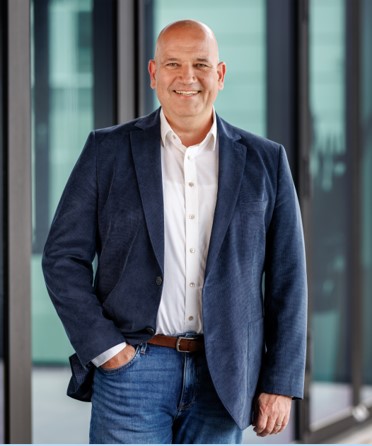 |
Powering the Power: The Relevance of Novel Semiconductor Prof. Dr.-Ing. habil. Jörg Schulze Director of Fraunhofer IISB · Chair of LEB, FAU Erlangen–Nürnberg, Germany
|
|
|
Power electronics is increasingly shaped by novel semiconductor materials that enable higher efficiency, faster switching, and greater power density. Among these, gallium nitride (GaN) and SiC are already highly relevant for next-generation power devices due to low losses, high switching speed, and strong performance in compact systems. Ultra-wide-bandgap materials, are considered the next generation of semiconductor materials, offering even greater potential for advancing power density, high-temperature, and high-frequency opperation, with aluminum nitride (AlN) being a promising example. AlN, with its wide bandgap, high thermal conductivity, and large critical electric field, is gaining fast growing attention for future power devices. Although challenges remain, GaN and AlN have strong potential to advance future power electronics and support disruptive innovation. |
||
12:15 - End
Campus de Beaulieu 35042 Rennes cedex France
+33 2 23 23 62 56Franck.Tessier@univ-rennes.fr
Via Salaria km 29.5, Monterotondo, 00015 Rome, Italy
giuseppina.padeletti@cnr.itFaculty of Materials Science & Engineering, Poland
malgorzata.lewandowska@pw.edu.plNational Institute for Materials Science (NIMS), Tsukuba, Japan
arisawa.shunichi@nims.go.jp