
Paul Siffert Award

The Paul Siffert Award (formerly E-MRS EU-40 Materials Prize) was established to recognise and honour young researchers whose work has already had a major impact in the field of Materials Science research and has led to great expectations for future research leadership. Although the award is not restricted to European citizens it is essential that the research for which the prize is awarded has been undertaken in a European university, research institute or industry.
Consequently, the award is directed to researchers who are showing exceptional promise as future leaders of European materials science working in Europe. Nominees for the award must not have reached his/her 40th birthday before 31st December 2026.
A limited extension to the age limit will be considered for a female researcher who has undertaken a period of maternity leave. A prospective nominee should contact E-MRS Headquarters to ascertain the situation well before the deadline for submitting nominations.
The award consists of a 5,000 Euro cash prize, a trophy, waiver of the registration fee and an invited Plenary presentation at the 2026 Spring Meeting & Exhibit of the European Materials Research Society where the award will be presented. The Spring Meeting will be held in Strasbourg, France from 25th – 29th May.
In addition the award winner will have the opportunity to deliver an invited plenary presentation at the MRS Fall Meeting in Boston, USA, usually in the year following the award of the Paul Siffert Award.
Nominations must include:
- Curriculum Vitae including the nominee’s date of birth;
- List of key publications (including citations and impact factors);
- Letters of support from two well established scientists;
- Any additional supporting information relevant to the award;
- A statement that the nominee is prepared to be present throughout the conference.
To apply for the Paul Siffert Award, please complete the form below. The deadline for receipt of nominations is 5 pm on Friday, 20th March, 2026.
Proposals will be evaluated shortly after the close of nominations and all candidates will be informed of the decision by 17th April 2026 at the latest.
Robert Hoye, University of Oxford, U.K. - E-MRS Paul Siffert Award Recipient 2026.
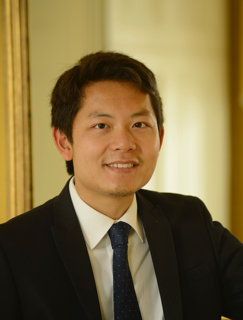 |
Defect tolerant semiconductors for energy, solar fuels and healthcare Prof. Robert Hoye CTO, NanoPrint Innovations Ltd, Cambridge, UK |
|
|
Optoelectronic materials underpin a wide range of applications in energy (e.g., photovoltaics), solar fuels (e.g., photoelectrochemical CO2 reduction), healthcare (e.g., radiation detection for medical imaging) and photonics (e.g., light emitters for optical communication). There have long been ambitions to develop optoelectronic materials that give high performance but are cost-effective to manufacture. Historically, these efforts have been driven by trial-and-error, screening through materials based on optical properties, but, in many cases, encountering bottlenecks from their limited charge-carrier transport properties. Over the past 10 years, we have worked on an alternative approach, based on the inverse design of optoelectronic materials with focus on defect tolerance, where low rates of non-radiative recombination are achieved despite high concentrations of traps. This talk discusses the evolution in understanding of how defect tolerance arises by studying lead-halide perovskites, and successes and challenges in developing lead-free, stable alternative materials that mimic this property [1]. In particular, I will discuss challenges arising from carrier localisation, and our work uncovering chemical design principles for how this limitation could be overcome [2]. Next, I will discuss promising materials that have come from this effort, such as BiOI and CuBiSCl2, and their impact in solar cell, solar fuel, indoor photovoltaic and X-ray detector applications [3-5]. Finally, I will discuss future directions; particularly, in this age of AI and self-driving labs, I emphasise the importance of fundamental materials science to bring out design principles underpinning defect tolerance to enable targeted and efficient inverse design. [1] Mosquera-Loi, …, Walsh,* Hoye,* Nat. Rev. Chem., 9, 287–304 (2025) [2] Fu, Lohan, …, Hoye,* Nat. Commun., 16, 65 (2025) [3] Hoye,* et al., Adv. Mater., 29, 1702176 (2017) [4] Andrei, Jagt, …, Hoye,* Reisner,* Nat. Mater., 21, 864–868 (2022) [5] Jagt, …, Hoye,* Nat. Commun., 14, 2452 (2023) Biography: Robert Hoye is an Associate Professor of Materials Chemistry at the University of Oxford, where he is also a Fellow of St. John’s College, and an STFC / Royal Academy of Engineering Senior Research Fellow. He completed his education at the University of Auckland, University of Cambridge, and MIT. He was a research fellow at the University of Cambridge, then Lecturer at Imperial College London, before moving to Oxford as Associate Professor. His team focusses on developing inorganic semiconductors for energy applications, including metal-halide perovskite nanocrystals, and lead-free ns2 semiconductors. His group’s research spans from fundamentals (including ultrafast spectroscopy and computations) through to optoelectronic device engineering. More information: hoyegroup.web.ox.ac.uk Prof. Hoye has made pioneering contributions to the development of new classes of solar absorbers for efficient, cost-effective photovoltaics, particularly pushing forward the understanding of defect tolerance and electron-phonon coupling in these materials, and he has patented these novel classes of materials. His work has been recognised with awards from the Royal Academy of Engineering, Institute of Materials, Minerals and Mining (IOM3), Royal Society of Chemistry, Springer Nature (2024 Rising Star of Light), and many others from across the world. He also received the 2021 Imperial President’s Award for Outstanding Early Career Researcher. Alongside his academic career, he is CTO of a startup (NanoPrint Innovations Ltd) commercialising the spatial atomic layer deposition (SALD) reactor he contributed to developing. SALD manufactures oxide semiconductors with comparable properties to ALD, but orders of magnitude faster and without vacuum. For his success in commercialisation, he was included in the 2023 MIT Technology Review Innovators Under 35 Europe. |
||
Peter-Grünberg-Straße 2, 64287 Darmstadt, Germany
anke.weidenkaff@mr.tu-darmstadt.deDepartment of Electronic & Electrical Engineering, Torrington Place, London WC1E 7JE, U.K.
a.kenyon@ucl.ac.ukCNR-IMM, Via S. Sofia, 64 I-95123 Catania, Italy
antonio.terrasi@ct.infn.itCollege of Polymer Science and Eng, State Key Laboratory of Polymer Materials Eng - Beijing, P.R. China
guangxianli@scu.edu.cn