
Plenary sessions

The scientific program is complemented by two plenary sessions:
Join us Monday afternoon May 25 in room SCHWEITZER (Ground floor) after lunch for a welcome session introducing E-MRS activities and honoring the recipient of the Paul Siffert Award (formerly E-MRS EU-40 Materials Prize). The latter is a prestigious prize awarded to researchers under 40 who are showing exceptional promise for leadership and have made outstanding and innovative contributions to Materials Research in Europe. This session will conclude with the presentation of the MRS Mid-Career Prize.
The second plenary session will be held on Wednesday afternoon May 27 in room SCHWEITZER (Ground floor), with three speakers. The line-up of the plenary speakers is outstanding and these events are wonderful opportunities to learn and to be inspired. The collective wisdom, perspective, and leadership experience of the three individuals will be a highlight of the conference week. The social event open to all participants will conclude the session.
It's hard to imagine a richer offering of speakers. And that's the point of the plenary session: they provide a shared experience for all conference attendees. Plenary session is a time for a break from the details of your week, a time to be stimulated and to reflect on the values that brought us to the field and that continue to motivate us each day.
Preliminary program
Monday May 25 from 13:30 to 14:30
13:30 - Welcome Address by Giuseppina Padeletti, E-MRS President
13:35 - Paul Siffert Award 2026 ceremony.
- Introduction of Robert Hoye and
- presentation of the trophy by A.J. Kenyon, Conference Chair
13:40 - Prof. Robert Hoye, University of Oxford, U.K. - E-MRS Paul Siffert Award Recipient.
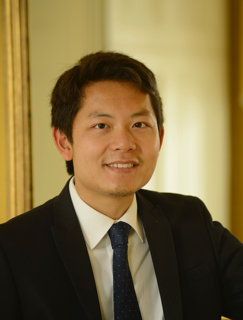 |
Defect tolerant semiconductors for energy, solar fuels and healthcare Prof. Robert Hoye CTO, NanoPrint Innovations Ltd, Cambridge, UK |
|
|
Optoelectronic materials underpin a wide range of applications in energy (e.g., photovoltaics), solar fuels (e.g., photoelectrochemical CO2 reduction), healthcare (e.g., radiation detection for medical imaging) and photonics (e.g., light emitters for optical communication). There have long been ambitions to develop optoelectronic materials that give high performance but are cost-effective to manufacture. Historically, these efforts have been driven by trial-and-error, screening through materials based on optical properties, but, in many cases, encountering bottlenecks from their limited charge-carrier transport properties. Over the past 10 years, we have worked on an alternative approach, based on the inverse design of optoelectronic materials with focus on defect tolerance, where low rates of non-radiative recombination are achieved despite high concentrations of traps. This talk discusses the evolution in understanding of how defect tolerance arises by studying lead-halide perovskites, and successes and challenges in developing lead-free, stable alternative materials that mimic this property [1]. In particular, I will discuss challenges arising from carrier localisation, and our work uncovering chemical design principles for how this limitation could be overcome [2]. Next, I will discuss promising materials that have come from this effort, such as BiOI and CuBiSCl2, and their impact in solar cell, solar fuel, indoor photovoltaic and X-ray detector applications [3-5]. Finally, I will discuss future directions; particularly, in this age of AI and self-driving labs, I emphasise the importance of fundamental materials science to bring out design principles underpinning defect tolerance to enable targeted and efficient inverse design. [1] Mosquera-Loi, …, Walsh,* Hoye,* Nat. Rev. Chem., 9, 287–304 (2025) [2] Fu, Lohan, …, Hoye,* Nat. Commun., 16, 65 (2025) [3] Hoye,* et al., Adv. Mater., 29, 1702176 (2017) [4] Andrei, Jagt, …, Hoye,* Reisner,* Nat. Mater., 21, 864–868 (2022) [5] Jagt, …, Hoye,* Nat. Commun., 14, 2452 (2023) Biography: Robert Hoye is an Associate Professor of Materials Chemistry at the University of Oxford, where he is also a Fellow of St. John’s College, and an STFC / Royal Academy of Engineering Senior Research Fellow. He completed his education at the University of Auckland, University of Cambridge, and MIT. He was a research fellow at the University of Cambridge, then Lecturer at Imperial College London, before moving to Oxford as Associate Professor. His team focusses on developing inorganic semiconductors for energy applications, including metal-halide perovskite nanocrystals, and lead-free ns2 semiconductors. His group’s research spans from fundamentals (including ultrafast spectroscopy and computations) through to optoelectronic device engineering. More information: hoyegroup.web.ox.ac.uk Prof. Hoye has made pioneering contributions to the development of new classes of solar absorbers for efficient, cost-effective photovoltaics, particularly pushing forward the understanding of defect tolerance and electron-phonon coupling in these materials, and he has patented these novel classes of materials. His work has been recognised with awards from the Royal Academy of Engineering, Institute of Materials, Minerals and Mining (IOM3), Royal Society of Chemistry, Springer Nature (2024 Rising Star of Light), and many others from across the world. He also received the 2021 Imperial President’s Award for Outstanding Early Career Researcher. Alongside his academic career, he is CTO of a startup (NanoPrint Innovations Ltd) commercialising the spatial atomic layer deposition (SALD) reactor he contributed to developing. SALD manufactures oxide semiconductors with comparable properties to ALD, but orders of magnitude faster and without vacuum. For his success in commercialisation, he was included in the 2023 MIT Technology Review Innovators Under 35 Europe. |
||
14:05 - Introduction of Prof. Andrea Alù
Prof. Andrea Alù, City University of New York, USA - MRS Mid-Career Research Award Recipient.
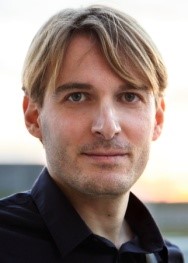 |
Unlocking New Wave Phenomena with Metamaterials Prof. Andrea Alù |
|
|
Metamaterials—artificial structures engineered at the nanoscale—have been transforming our ability to control waves such as light, radio-waves and sound. By designing these materials with specific geometrical patterns, we can unveil remarkable effects and phenomena that do not commonly exist in natural materials. In this talk, I will discuss how these engineered materials can offer a powerful platform to expand the range of available materials for various technologies of interest, and how in return they can leverage the latest developments in material synthesis to enable extreme wave phenomena by combining them with photonic engineering. In particular, by leveraging polaritonic phenomena in structured materials we can enable giant nonlinear responses and light-matter interactions, and extreme control over the incoming and outgoing wavefronts in space, time, frequency, momentum, energy and coherence. These concepts open the door to phenomena that tightly connect physics, engineering and materials science. Finally, I will discuss how these principles translate into emerging technologies—from imaging and energy systems to improved sensing, computation and communication devices, spanning classical and quantum wave technologies. Biography: Andrea Alù is a Distinguished Professor at the City University of New York (CUNY), the Founding Director of the Photonics Initiative at the CUNY Advanced Science Research Center, and the Einstein Professor of Physics at the CUNY Graduate Center. He received his Laurea (2001) and PhD (2007) from the University of Roma Tre, Italy, and, after a postdoc at the University of Pennsylvania, he joined the faculty of the University of Texas at Austin in 2009, where he was the Temple Foundation Endowed Professor until 2018. His research interests span over nanophotonics, metamaterials and wave physics. |
||
14:30 - Conclusion by A.J. Kenyon, Conference Chair
Wednesday May 27 from 16:30 to 18:40
16:30 - Welcome Address by the Conference Chairs
16:35 - Introduction of the first plenary speaker by Antonio Terrasi, Conference Chair
16:40 - Prof. Cosimo Gerardi 3SUN Gigafactory, Catania, Italy
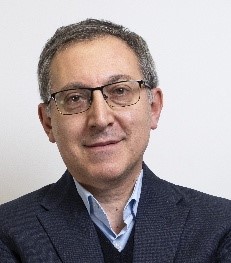 |
Innovating Gigawatt-Scale PV Manufacturing in Europe Cosimo Gerardi 3SUN Gigafactory
|
|
|
Scaling high-efficiency photovoltaic (PV) technologies to gigawatt-level production in Europe represents both a formidable technical challenge and a strategic imperative for energy sovereignty. 3SUN is leading this transformation, with a strong focus on the industrialization of silicon heterojunction (HJT) solar cells—renowned for their superior efficiency and long-term stability. To enable large-scale manufacturing, our research and development teams are advancing innovations in process control, next-generation equipment design, and sustainable material sourcing, systematically addressing the key bottlenecks that currently constrain throughput and yield. In parallel, we are at the forefront of developing next-generation tandem solar architectures, specifically integrating HJT as the bottom cell with a perovskite top cell. Our research spans materials engineering, interface optimization, and rigorous reliability testing, all aimed at surpassing 30% power conversion efficiency and ensuring robust operational stability. We are also pioneering scalable deposition and encapsulation techniques to accelerate the industrial deployment of these tandem devices. By integrating fundamental research with applied engineering, 3SUN is committed to accelerating the reshoring of Europe’s PV manufacturing industry. Our efforts are directed toward establishing a resilient, high-efficiency, and sustainable solar value chain, positioning Europe as a leader in advanced PV technology. Biography: Cosimo Gerardi is the Chief Technology Officer of 3SUN, the PV Gigafactory of Enel Group. He has nearly 30 years of experience in semiconductors and photovoltaic technologies. He began his career as a scientific researcher and spent over 15 years as R&D Manager in micro- and nano-electronic technologies at STMicroelectronics. Since 2011, he has led R&D and Product Engineering at 3SUN, driving innovation in photovoltaic technology. As CTO, he oversees the R&D and Product Engineering teams, driving innovation and new product development for the company. He is the author of more than 200 publications, including patents and technical papers, reflecting his significant contributions to the advancement of photovoltaic and semiconductor technologies. |
||
17:15 - Introduction of Prof. Nobuhiro Matsushita by Patrick Bressler, E-MRS General Secretary
17:20 - Prof. Nobuhiro Matsushita, Institute of Science Tokyo, Vice President of MRS-Japan.
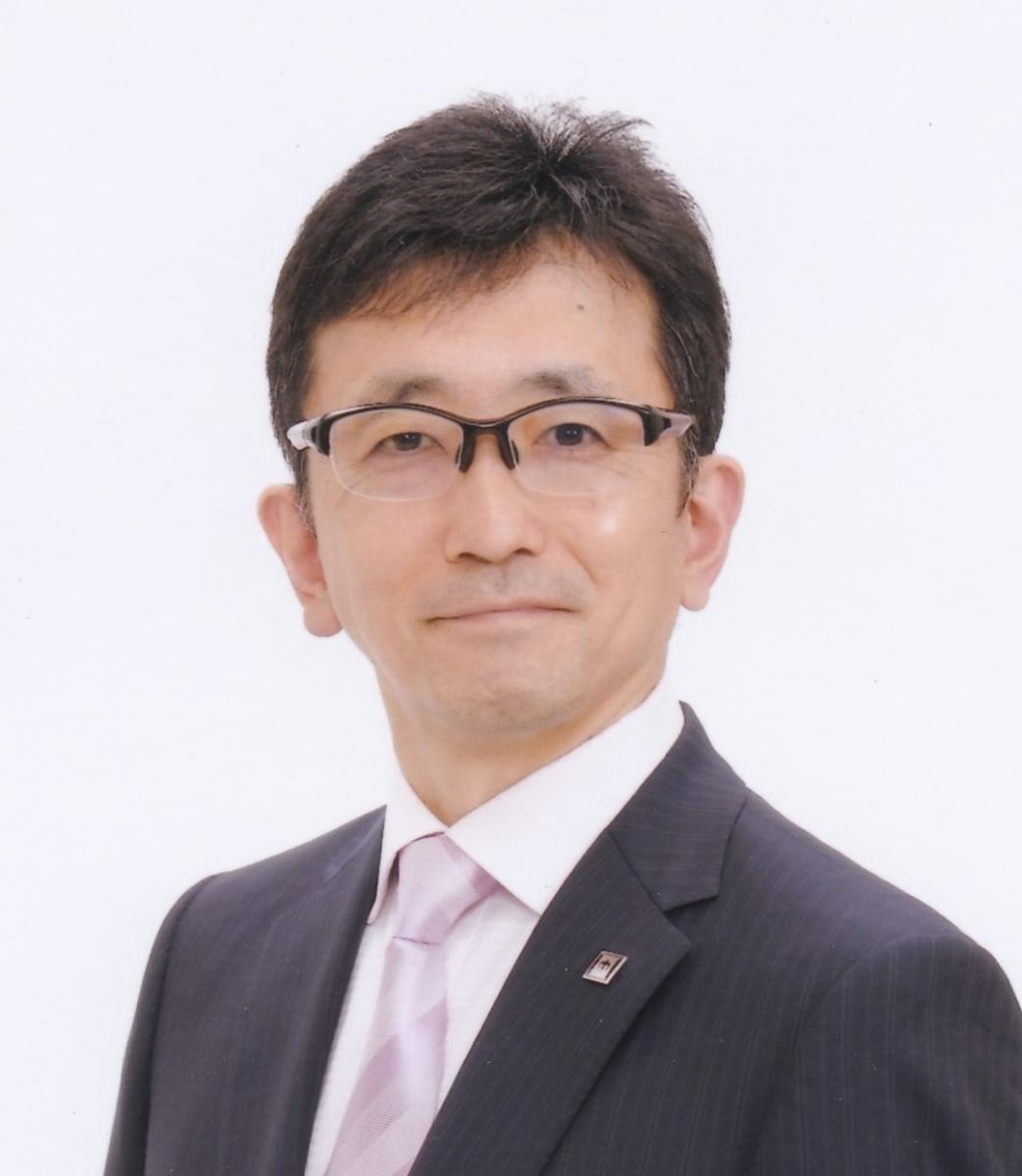 |
Advanced processes of functional ceramic materials with Nobuhiro Matsushita and Yuta Kubota
|
|
|
There are various material processing methods, each with its own advantages and disadvantages, but it goes without saying that processes with low environmental impact and low energy consumption will be preferable in the future. Biography: Nobuhiro Matsushita is vice-president of Science Tokyo and also the director of the Museum and Archives of Science Tokyo. After getting his doctorate from Tokyo Institute of Technology with a degree in magnetic recording, he shifted his research focus to developing low-environmental-load solution processes that can fabricate functional ceramic materials. For over 25 years, he has been investigatin the applications of these processes in the fields of electronics, biotechnology, and environment/energy. In addition to the transparent conductive ZnO film, semiconductor Cu2O film, and magnetic ferrite film that will be talked in his presentation, he is also investigating the application of functional oxides to a wide variety of fields, including CuO films that could be used in humidity control applications, MnO2 films that could be used in supercapacitor films, ferrite nanoparticles for magnetic hyperthermia application, and titania nanomesh structures that could be bonded to bone in a short time. |
||
17:55 - Introduction of Dr. Christine Courillon by Anke Weidenkaff, Conference chair
18:00 - Dr. Christine Courillon, ERC Executive Agency, Brussels, Belgium
 |
How and why prepare a project for the European Research Council – ERC? Dr. Christine Courillon
|
|
|
The European Research Council (ERC) and its executive agency are recognized for funding cutting-edge research proposed by researchers from around the world working in all scientific fields. Applicants, who may be of any nationality, commit to implementing their research project in Europe (in one of the EU Member States or one of the associated countries). Within the framework of the "Horizon Europe" program, the entire process will be presented, including the new features of the 2026 calls and those planned for 2027: from application preparation to project implementation, including evaluation and contract signing. Several stakeholders (principal investigators, evaluators) will be invited to share their "ERC" experience. Biography: Christine Courillon followed PhD studies at CNRS and was a post-doctoral associate at the University of Austin, Texas, where she worked on the total synthesis of Ambruticine.
|
||
18:40 - End of session
Peter-Grünberg-Straße 2, 64287 Darmstadt, Germany
anke.weidenkaff@mr.tu-darmstadt.deDepartment of Electronic & Electrical Engineering, Torrington Place, London WC1E 7JE, U.K.
a.kenyon@ucl.ac.ukCNR-IMM, Via S. Sofia, 64 I-95123 Catania, Italy
antonio.terrasi@ct.infn.itCollege of Polymer Science and Eng, State Key Laboratory of Polymer Materials Eng - Beijing, P.R. China
guangxianli@scu.edu.cn